
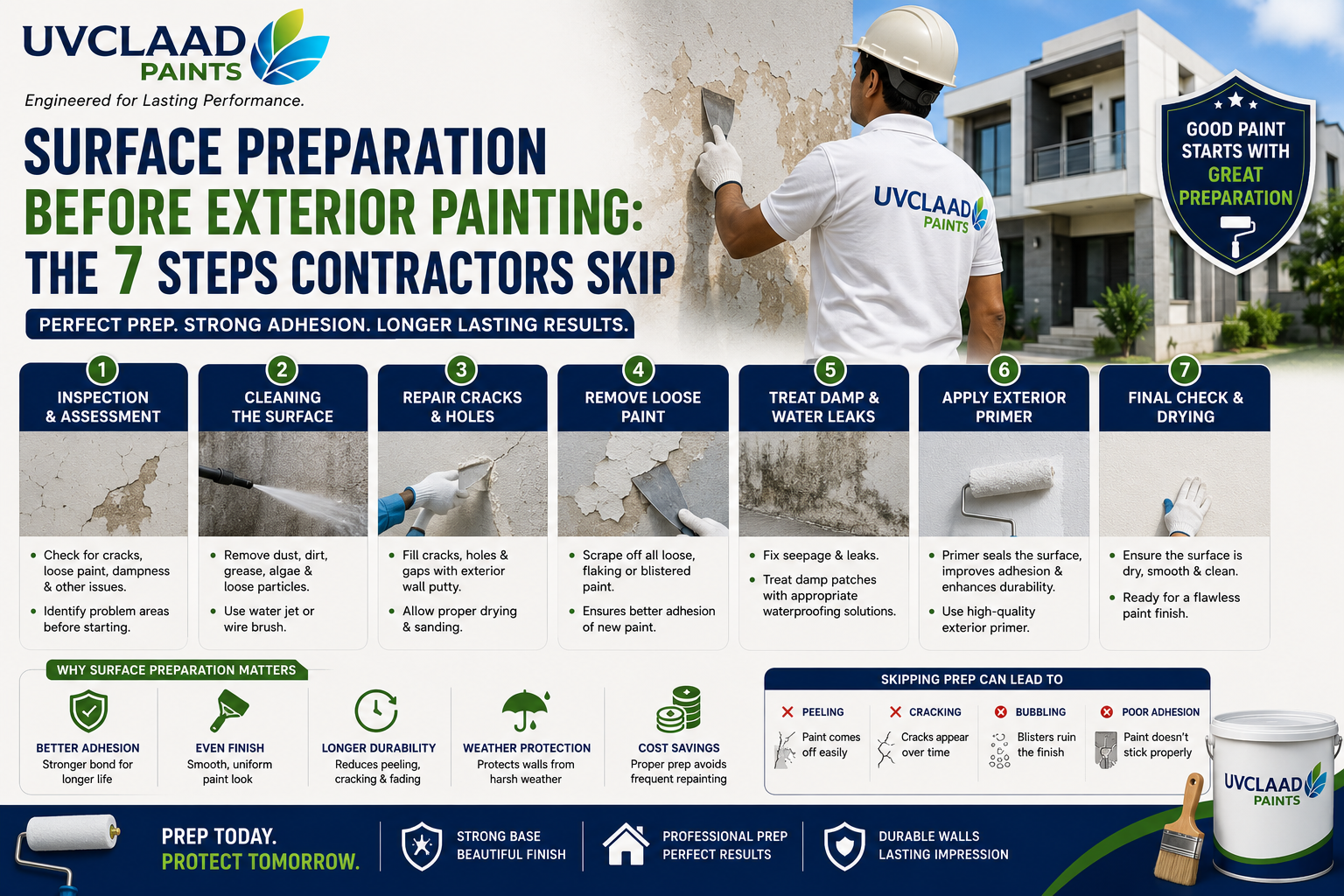
The damp patch is on your bedroom wall. The problem is on the outside of the building. That gap between where you see it and where it starts is why so much money gets spent fixing the wrong thing.
How to Tell Where Seepage Is Coming From
Water travels. It enters at one point, moves through plaster and masonry along the path of least resistance, and appears somewhere else entirely, often lower down and to one side.
So before anything else, go outside and look at the wall directly behind the damp patch, then look about two to three feet above it. That upper zone is where the entry point usually sits.
Check the same wall after a heavy shower and again three days later. A patch that darkens during rain and shrinks afterwards is penetrating damp. A patch that stays roughly the same size year-round is more likely rising damp or a leaking pipe.
The Four Types of Damp in Indian Homes
Penetrating damp comes in horizontally through cracked plaster, open joints or porous masonry during driving rain. Most common on the wall that faces the prevailing monsoon wind.
Rising damp travels upward from the plinth through capillary action in the masonry. It stops at a fairly consistent height, usually under a metre, and often leaves a salt line at the top edge.
Plumbing leakage is constant, unaffected by weather, and often warm to the touch if it is a hot water line. The patch tends to be smaller and more sharply defined.
Condensation forms on the inside surface in humid weather, particularly in bathrooms and kitchens with poor ventilation. It is not seepage at all, though it looks similar.
Usual Suspects: Parapet, Chajja and Pipe Joints
In Indian construction, the same handful of details fail again and again.
- Parapet wall junction. The joint where the parapet meets the terrace slab moves with temperature and cracks. Water runs straight down the inside of the external wall.
- Chajja and sunshade top surface. Usually unfinished, often ponding, and the junction with the wall is rarely sealed.
- Window sills without a drip mould. Rain runs off the sill, tracks back underneath and soaks into the wall below.
- Pipe and conduit penetrations. AC drain lines, plumbing, cable entries. Drilled through and never properly sealed.
- Terrace-to-wall junction. If the waterproofing does not turn up the wall by at least 150 mm, water gets behind it.
Why Painting Over Damp Always Fails
People try this constantly and it never works.
Paint over a damp wall and you seal the moisture in. Sun heats the wall, water becomes vapour, vapour expands, and it pushes the paint film off from behind. You get blisters within one season, often within weeks.
Waterproof paint makes this worse, not better, because it is less permeable. The wall must be dry before it is coated. There is no product that gets around this.
Fix Sequence: Cheapest to Most Involved
Work down this list. Stop when the problem stops.
- Seal visible cracks and joints. Acrylic or PU sealant on cracks up to 3 mm. Rs 2,000 to Rs 6,000 typically. Fixes a surprising number of cases.
- Reseal pipe penetrations. Rake out the old material, fill with polymer-modified mortar, seal the perimeter. Cheap and frequently the actual culprit.
- Treat the chajja and sill tops. Slope correction plus a waterproof coating on the top surface, and a drip mould underneath.
- Parapet junction treatment. Groove out the joint, fill with sealant, apply a fillet and coat over. Rs 10,000 to Rs 30,000 depending on length.
- Full external wall waterproof coating. A breathable exterior waterproofing system over the whole facade. Rs 25 to Rs 60 per sq ft.
- Terrace waterproofing. The big one. Rs 60 to Rs 180 per sq ft. Only if the source is genuinely above.
What Waterproof Paint Can and Cannot Do
It can keep driving rain out of sound plaster. It can bridge hairline cracks up to about 0.3 mm, and elastomerics up to roughly 1 mm. It can reduce how much water a porous wall absorbs.
It cannot seal a 3 mm crack, stop rising damp, fix a leaking pipe, or repair failed terrace waterproofing. Anyone selling it as a solution to those is selling you a second failure.
Preventing It From Coming Back
Once the wall is dry and the source is fixed, two things extend the repair’s life considerably.
First, use a breathable exterior finish. The wall will still take on some moisture, and it needs to be able to release it.
Second, inspect the usual failure points once a year, ideally in September just after monsoon. Parapet joint, chajja tops, pipe entries, sill undersides. Five minutes with a torch. Sealing a hairline crack costs almost nothing; letting it run for three monsoons costs a repaint.
Frequently Asked Questions
How do I stop water seepage from an outside wall?
Find and seal the entry point first, usually a crack, parapet junction, chajja top or pipe penetration. Let the wall dry for several days, then apply a breathable exterior waterproof coating. Painting before the source is fixed will fail.
Can waterproof paint stop seepage?
Only surface-level water penetration through sound plaster. It cannot stop seepage through cracks wider than about 1 mm, rising damp, plumbing leaks or failed terrace waterproofing, all of which need the source repaired first.
Why is my inside wall damp?
Most commonly water is entering the outside face of the same wall, typically two to three feet above the visible patch, through a crack or failed joint. Rising damp from the plinth and plumbing leaks are the other common causes.
How much does wall waterproofing cost in India?
Crack sealing runs Rs 2,000 to Rs 6,000, parapet junction treatment Rs 10,000 to Rs 30,000, full external wall waterproof coating Rs 25 to Rs 60 per square foot, and terrace waterproofing Rs 60 to Rs 180 per square foot.
How long does a damp wall take to dry?
A plastered wall needs three to five clear dry days after the water source is sealed. Heavily saturated masonry can take two to three weeks. Painting before it is fully dry causes blistering within one season.